Pickleball is taking the world by storm! This fun and energetic paddle sport is exploding in popularity for good reason (learn more here: Why is Pickleball So Popular?). So, what exactly is pickleball? It's a paddle sport that combines elements of badminton, tennis, and table tennis. Invented in the 1960s on Bainbridge Island, it has grown into a game enjoyed by people of all ages and skill levels. Ready to give it a try? The Paddle Experts at JustPaddles put together this guide to walk you through the basics of pickleball, from equipment to the essential rules.
How To Play Pickleball
Pickleball Equipment
You only need a few things to get started playing pickleball:
-
Paddle: Pickleball paddles are similar to oversized ping pong paddles. They come in various materials and weights, so it's important to choose one that suits your style. We have a vast selection at JustPaddles, but don’t worry, our Paddle Coach and Paddle Experts can help point you in the right direction. As you begin playing, aim for a paddle that feels easy to maneuver—lighter paddles help beginners develop control without straining their wrist or shoulder. Check out the most popular paddles for those first stepping on the court below!
-
Balls: Pickleball balls resemble wiffle balls with small holes. Can't play without them, and we have you covered! Check out the options below!
- Court and Net: You can play pickleball on a badminton court with a slightly modified net. Thinking about setting up your own court? Check out these portable net options: Best Portable Pickleball Net. See the court dimensions below or check out our blog on the Pickleball Court Dimensions.

As you can see, the pickleball court is similar to a badminton or tennis court with a few key differences. Here's a breakdown of the important lines:
- Baseline: The back lines of the court.
- Sideline: The lines running the length of the court on either side.
- Centerline: Divides the court in half.
- Non-volley zone (aka “the kitchen”): The area extending 7 feet from the net on both sides.
- Service court lines: Short lines that divide the service area within the kitchen.
Once you're on the court, a helpful starting point is standing just behind the baseline when receiving a serve and gradually moving forward as the rally develops. Understanding the court is only half the story—the way you move on it matters just as much. New players tend to stay rooted in one place, but pickleball rewards light, intentional movement. Try staying on the balls of your feet, keeping your paddle out in front of you, and taking small, quick steps rather than big lunges. This will help you react to unexpected bounces, prepare for volleys, and maintain balance during longer rallies. As you gain experience, you’ll start reading your opponent’s shots earlier, which naturally improves your positioning and makes the game feel smoother and more predictable.
7 Rules of Pickleball

1. Scoring:
- Only the serving team can score a point.
- Games are typically played to 11 points, but you must win by 2.
- Scoring is announced as “serving team score - receiving team score - server number (e.g., 2-1-2).
2. Serving:
- Pickleball serve technique involves an underhanded short swing.
- The serve must be aimed at and land diagonally across the crosscourt past the kitchen.
- The server must make the initial hit from behind the baseline on the opposite service court.
3. Serving Sequence:
- The first serve starts on the right side of the court.
- After winning the point, the server switches sides and serves again.
- This continues until the server faults, then the other team serves.
- After both players on the other team have served (and faulted), serve possession returns to the original team.
- In doubles, partners alternate serves until a fault occurs.
4. Initial Play:
- The original serving team only gets one serve (and fault), then the other team serves.
5. Faults:
- Serving faults include hitting the net, serving out of bounds, or serving with an overhead motion.
- Non-volley zone violations (kitchen faults) occur when a player volleys (hits the ball in the air) within the non-volley zone before the ball bounces.
- Line faults happen when the ball lands outside the court lines.
- Double-bounce rule faults occur when the ball bounces twice on the same side of the net before being returned.
- As you play more, you’ll naturally start to recognize these moments and adjust your positioning or timing to avoid them.
6. Kitchen:
- Volleying is not allowed in the non-volley zone (kitchen) unless the ball bounces first.
- Players can enter the kitchen, but cannot volley from there.
7A. Singles Play:
-
Players switch sides of the court based on whether the score is odd or even.
7B. Doubles Play:
- Teams alternate serving partners after each fault.
- Scoring remains the same as in singles.
Now that you know the essentials, it’s helpful to understand how a typical point develops. In most beginner games, rallies start slowly as players work their way toward the kitchen line. This area becomes the main battleground because closer shots give you more control and better angles. Patience plays a big role—pickleball isn’t always about power. Instead, think of it as a series of controlled, thoughtful exchanges where placing the ball is often more effective than trying to hit a winner. As you get more comfortable, you’ll start recognizing when to advance, when to reset the point with a softer shot, and when to stay back and defend.
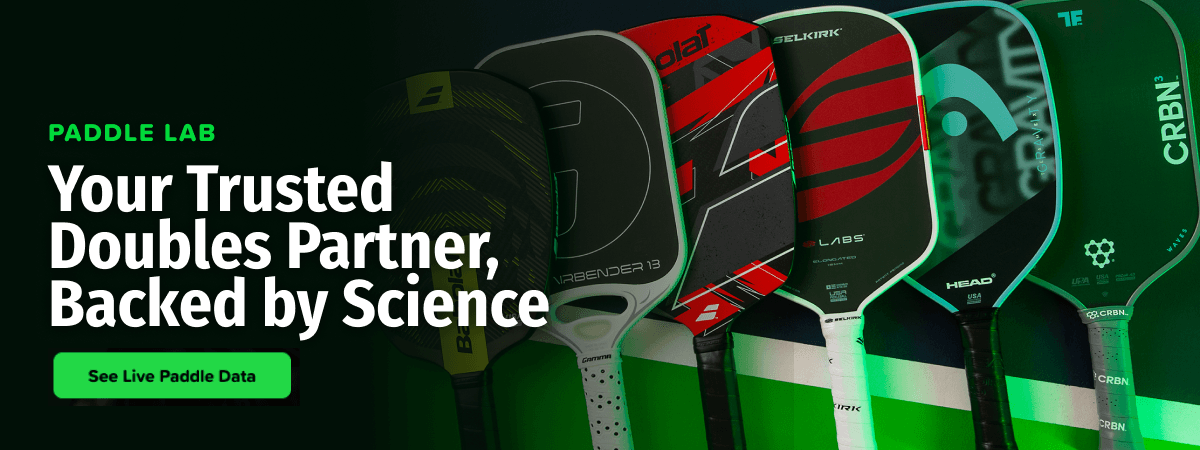
Want in depth detailed data on on all the paddles that we carry? Check out our Paddle Lab that will give you data backed by science on every pickleball paddle!
Beginner Tips to Build Confidence on the Court
If you're just starting out, don’t worry about mastering everything at once. Focus on getting the ball in play, keeping rallies going, and learning the feel of your paddle. Short practice sessions—10 to 15 minutes of serves, returns, and soft shots—make a big difference early on. Many beginners also find it helpful to shadow more experienced players or join a local beginner clinic, where you can learn correct footwork and positioning from the start. Little improvements stack up quickly in pickleball, and most players notice their skills taking off within just a few sessions.
Another key tip is communication if you're playing doubles. Calling out shots, discussing who covers the middle, and agreeing on a general strategy (like who takes overheads) helps you avoid confusion and keeps both players moving with purpose. Even simple phrases like “yours!” or “bounce!” can prevent mis-hits and make rallies more enjoyable.
Developing Good Paddle Habits Early
Good habits go a long way in pickleball. Start by holding your paddle in a neutral, ready position—elbows relaxed, paddle up, and your wrist firm but not tense. This reduces reaction time and keeps you prepared for both forehand and backhand shots. Many beginners accidentally drop their paddle by their hip between shots, which makes it harder to respond quickly. By keeping the paddle high and centered, you'll feel more in control and more confident during fast exchanges.
Another simple habit worth practicing is grip pressure. Think of holding your paddle like you would hold a small bird—firm enough that it won’t fly away, but gentle enough not to crush it. A looser grip gives you better touch on softer shots and prevents the paddle from twisting on off-center hits.
Pickleball for Dummies: FAQs
We've got you covered! Here are some answers to the most common questions beginners have about pickleball:
What should I wear to play pickleball?
Comfort is key! Opt for athletic clothing that allows for easy movement. Breathable fabrics like cotton or moisture-wicking synthetics are ideal. Choose comfortable athletic shoes with good court support. Shoes with good lateral stability will help you move confidently as you learn quick side-to-side footwork.
How do I choose the right paddle?
Selecting the perfect paddle can make a big difference in your game. We have a comprehensive guide to help you find the ideal paddle for your playing style, grip preference, and budget: JustPaddles Paddle Buying Guide.
How do you train for pickleball?
There are many ways to train for pickleball, regardless of your current fitness level. Check out our blog post on pickleball training for tips on improving your footwork, agility, strength, and pickleball-specific skills: Pickleball Training. If you're brand new, start with short rallies and simple serving practice—these build confidence faster than anything else.
How do you play basic pickleball?
Basic pickleball starts with an underhand serve hit diagonally across the court. Each side must let the ball bounce once before hitting it (the double-bounce rule), and rallies continue until a fault is made. Games are typically played to 11, win by 2, and only the serving team can score.
What are the 5 rules of pickleball?
While there are more than five rules, beginners can focus on these essentials: use an underhand serve, serve diagonally, let the ball bounce once on each side before volleying, avoid volleying in the kitchen, and remember that only the serving team scores points.
What are the 5 P’s of pickleball?
The “5 P’s” are a simple memory tool often shared with beginners: Preparation, Positioning, Patience, Placement, and Persistence. They’re not official rules, but they help new players approach each rally with intention.
What is the golden rule of pickleball?
The golden rule is to avoid stepping into the kitchen to volley. Keeping the non-volley zone clear ensures fair play and helps maintain the unique style of pickleball rallies.
Want to get everything you need for the court? Check out Pick your Packs at JustPaddles that let you pick and choose the paddle for your game at a fraction of the cost! that will get you straight to the kitchen below!
Key Takeaways
- Pickleball is easy to learn and beginner-friendly, making it enjoyable for players of all ages and skill levels.
- Only a few pieces of equipment are needed to get started, and choosing the right paddle and gear helps new players feel more confident.
- Understanding core rules—serving, scoring, faults, the kitchen, and the double-bounce rule—is essential for playing correctly.
- Movement, positioning, and simple paddle habits improve rally control and help beginners develop smoother gameplay.
- Consistent practice and embracing pickleball’s supportive community help new players progress quickly and enjoy their early games.
What to Expect in Your First Few Games
Your first games of pickleball will probably feel exciting, a little chaotic, and incredibly fun. Most new players spend the first few minutes adjusting to the ball’s unique bounce and the size of the court. Don’t be surprised if you find yourself smiling through most of the game—pickleball has a way of pulling players in quickly. As you play more, you’ll start recognizing patterns: when to move forward, when to stay back, how to prepare for a fast volley, and when to slow things down with a softer shot.
Another thing you'll notice is the welcoming culture of pickleball. Players of all ages and skill levels often share courts, and the community typically encourages new players to jump in. You’ll likely receive friendly tips, hear plenty of laughs, and discover quickly why this sport has become a nationwide phenomenon. Embrace the learning process, and don’t be afraid to make mistakes—they’re part of the fun and part of every player’s journey.
--
Your Pickleball Journey Starts Here
Whether you are new to pickleball or a seasoned player, we are excited to have you at JustPaddles. Our goal is to spread knowledge and information about the sport we love. Reach out to us through our Live Chat, email support@justpaddles.com, or give us a call or text at 1-866-382-3465! We love pickleball so much that we made it into our business. If you’re ever in the market to buy new pickleball paddles, be sure to look us up. We’re JustPaddles, and we’re with you from Click to Court!